
#HerbalTea #TeaForWellness #HealthBenefitsOfTea #TeaLover#HolisticHealth
Composed by Anuchit Thepsee JIU Wellness Co., Ltd.
What Are Antioxidants—and Do We Really Need Supplements?
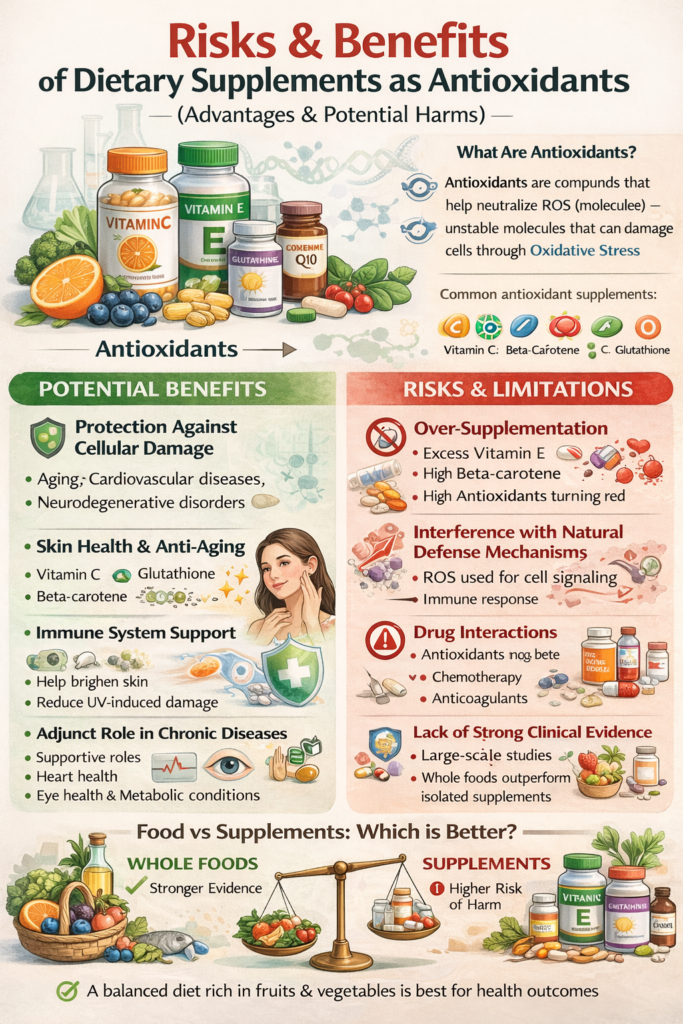
Our bodies constantly produce Reactive Oxygen Species (ROS)—unstable molecules that can damage cells, proteins, and DNA through oxidative stress.
Antioxidants help neutralize these molecules, making them widely associated with anti-aging and disease prevention.
Common examples include: Vitamin C, Vitamin E, Beta-carotene, Glutathione, and Coenzyme Q10
But the real question is:
👉 Do we need supplements, or is food enough?
🌿 Benefits of Antioxidant Supplements
✅ Cellular Protection
They may reduce oxidative damage linked to aging, cardiovascular, and neurodegenerative diseases.
✨ Skin & Anti-aging
Support brighter skin, reduce UV damage, and enhance collagen production.
🛡️ Immune Support
Help maintain proper immune function.
❤️ Role in Chronic Diseases
Used as supportive therapy in heart, eye, and metabolic conditions.
⚠️ Risks & Limitations
❌ Over-supplementation
High doses may cause harm:
- Excess antioxidants → pro-oxidant effects
- Vitamin E → bleeding risk
- Beta-carotene (smokers) → increased lung cancer risk
⚖️ Disruption of Natural Mechanisms
ROS are essential for signaling and immune defense.
Too much suppression may impair normal physiology.
💊 Drug Interactions
May interfere with:
- Anticoagulants
- Chemotherapy
📉 Limited Clinical Evidence
Large-scale human studies often show inconsistent benefits.
Whole foods outperform isolated supplements.
🥗 Food vs Supplements
🥦 Whole Foods
✔ Stronger scientific support
✔ Nutrient synergy
✔ Safer long-term
💊 Supplements
⚠️ Higher risk when misused
⚠️ Not balanced
⚠️ Best for targeted use only
⚖️ How to Balance the Decision
Use supplements when:
- There is a deficiency
- Specific medical indication exists
- Under professional guidance
Avoid excessive use when:
High-dose, long-term use without monitoring
Antioxidants are not magic bullets.
A balanced diet remains the best foundation for health.
👉 Smart choices—not more pills—lead to better outcomes.